
Let’s talk about one of the most common ways we create drama and waste time in the workplace: The Feedback Triangle of Doom™
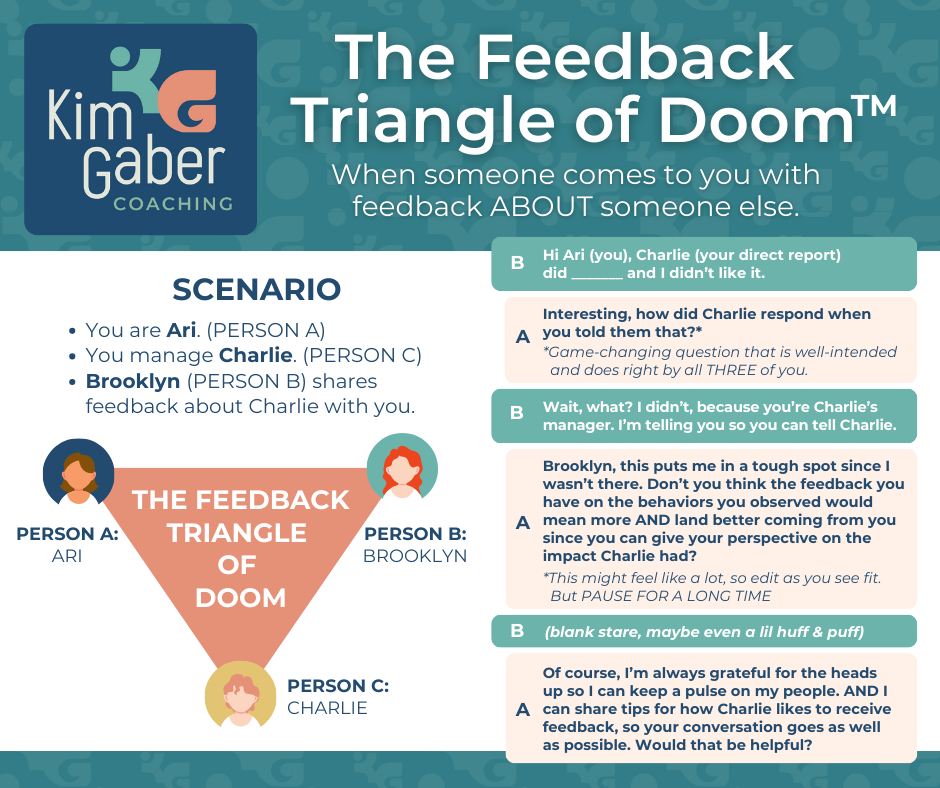
This scenario happens everywhere, from the corporate office to the research lab, and it always looks the same: Person B (Brooklyn) has a problem with Person C (Charlie), but instead of talking directly to Charlie, Brooklyn comes to you (Ari, the manager) and says, “Hi Ari, Charlie did X, and I didn’t like it. You need to tell them.”
Ugh. Instant time suck. Instant mess. Also just instant dread.
If you jump in and agree to deliver that message for Brooklyn, you become the messenger, the referee, and the ultimate source of pain. You’ve engaged in the huge, messy triangle that avoids accountability and actually erodes/destroys trust.
Why This Triangle is a Giant Suck on your TIME
When you agree to deliver Brooklyn’s feedback to Charlie, you violate three important aspects of effective feedback (and overall leadership):
- You weren’t there! You can’t speak to the behavior with the same clarity or authority that Brooklyn can. You’re delivering secondhand observations (aka hearsay).
- You remove accountability. But by all means, let’s keep spend all day in meetings trying to solve for that elusive “accountability”! You’ve taught Brooklyn that if they have a problem, they don’t have to be brave (or, ahem, accountable); they just have to delegate the uncomfortable conversation to you.
- You weaken the relationshipS. You’ve stepped in between Charlie and Brooklyn, making conflict resolution impossible and ensuring they’ll have to come back to you for every tiny issue moving forward. Charlie and Brooklyn are co-workers. They’re in meetings with each other that you’re simply not. They are going to have to work together again in the next meeting.
The Game-Changing Question (My Favorite Tip)
So, when Brooklyn comes to your desk and dumps the drama, how do you handle it without being rude or dismissive? You need a game-changing question that is well-intended and does right by all three of you.
Your line, delivered with a pause and a curious, non-judgmental tone, is this:
“Interesting. How did Charlie respond when you told them that?”
Nine times out of ten, they’ll be stunned because they haven’t told Charlie anything. They’ll huff, puff, and say, “What? I didn’t! That’s your job; you’re the manager.”
The Brave Manager’s Response
This is the moment of truth. You must push back gently but firmly. You’re not being unkind; you’re preserving your time and empowering your team members to grow.
Here’s your follow-up script (feel free to edit as you see fit):
“Brooklyn, I appreciate you keeping me in the loop so I can keep a pulse on my people. But this puts me in a tough spot since I wasn’t there.”
“Don’t you think the feedback on the behaviors you observed would land better coming from you, since you can give your perspective on the immediate impact it had on your work?”
*Disclaimer, this needs to be adapted for whatever your organization’s hierarchy dictates. Still play within the corporate rules; however – most of the time, Brooklyn isn’t the CEO passing on feedback for an entry level associate.
The goal is to pause here and let the silence hang. They will realize you’re not taking the bait. Then, offer a lifeline (especially if they push back):
“Of course, I can share tips for how Charlie likes to receive feedback, so your conversation goes as well as possible. Would that be helpful?”
By doing this, you’ve offered support and resource management (your leadership skill) without taking on the emotional labor of delivering the actual message. You’ve modeled for your team/colleagues that accountability is expected; feedback is part of working relationships.
Stop falling jumping into the Feedback Triangle of Doom. You’re smarter than that, and you genuinely have better things to be doing!
Ready to cut down on unnecessary swirl and reclaim your time? My workshops provide practical, ready-to-implement scripts for these exact scenarios and more. Let’s talk about making your work easier.